



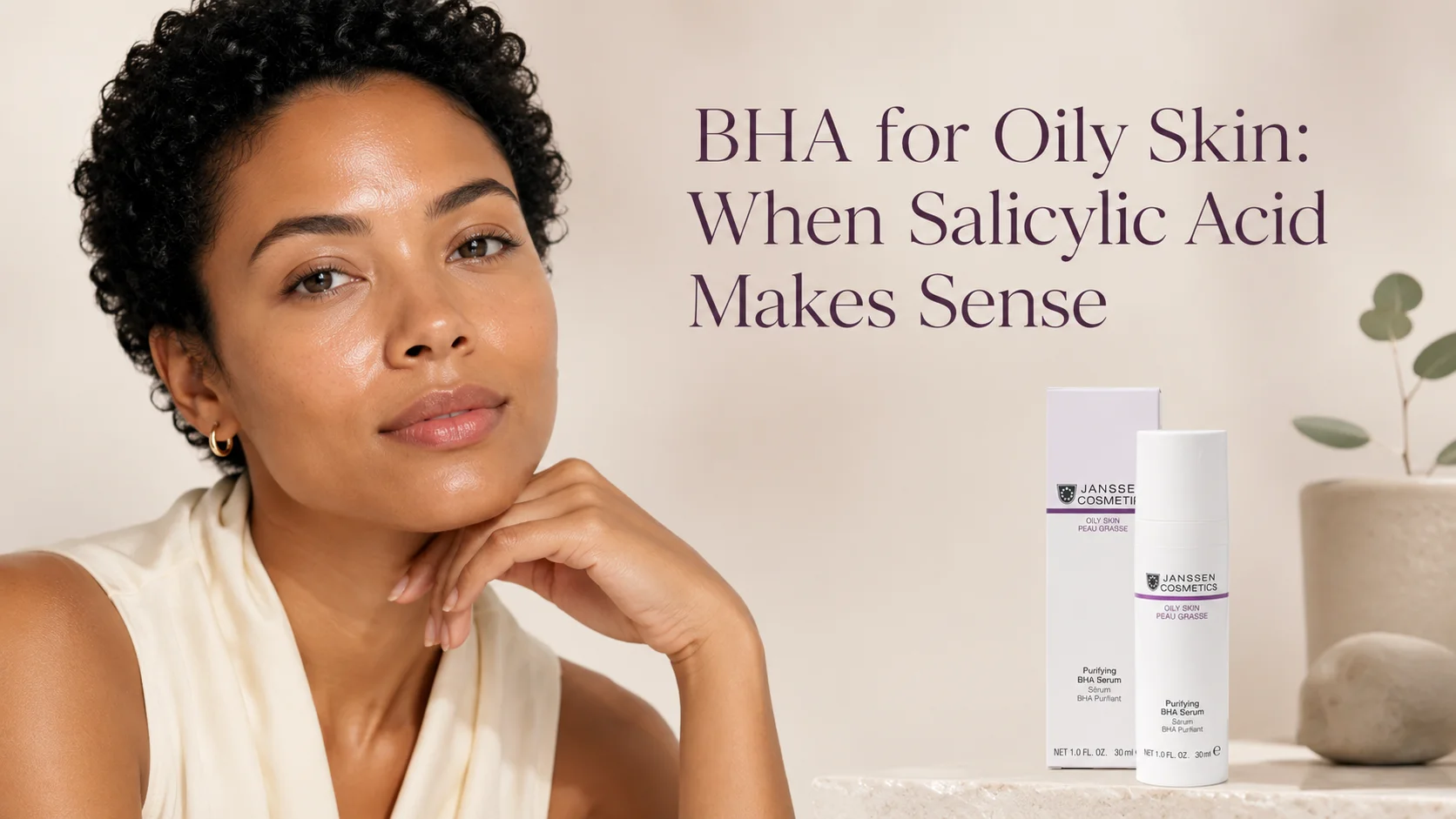
BHA is one of the most talked-about ingredients for oily skin, and for good reason. When the skin looks shiny, the T-zone feels greasy, and pores look clogged around the nose or chin, salicylic acid often comes up in the conversation.
But BHA is not something to add just because the skin is oily.
Some oily skin needs BHA. Some oily skin needs a better cleanser first. Some needs lightweight moisture because the face is shiny but tight. Some needs fewer active products because the skin has already been pushed too far.
At Zendevie, we do not look at shine alone. In consultation, our licensed esthetician looks at where the oil appears, whether there are blackheads or whiteheads, how the skin feels after washing, and whether the current home care is making the face feel tight or irritated.
That is how we decide whether BHA makes sense.
BHA, also known as salicylic acid, may make sense for oily skin when the main concern is clogged-looking pores, blackheads, whiteheads, bumpy texture, or a congested T-zone.
It should be introduced with caution if the skin feels tight, dry, stingy, over-cleansed, or sensitive.
BHA can be helpful in the right plan, but it should not be layered with every strong cleanser, exfoliating toner, retinol, scrub, and clay mask at the same time.
BHA stands for beta hydroxy acid. In skincare, the most common BHA is salicylic acid.
It is often used in products designed for oily, blemish-prone, or clogged-looking skin because it works well in areas where oil and buildup are part of the concern.
For a client, the practical explanation is simple: BHA may be considered when the skin does not just look shiny, but also looks congested.
That distinction matters. Shine alone does not always mean BHA is the next step.

BHA may be a good ingredient to discuss when oily skin shows:
This is where BHA can have a clear cosmetic role. It is not being used to “dry out” the face. It is being considered because the skin is showing clogged-looking behavior.

BHA is not always the best starting point.
If your skin is oily but also tight, stingy, flaky, or easily irritated, the first issue may be over-cleansing or dehydration.
In that case, adding BHA too quickly may make the skin feel worse.
Before BHA, look at the basics:
If yes, the skin may need a calmer plan before adding more exfoliation.
Blackheads often show up in oily areas, especially around the nose, chin, and sometimes the forehead.
BHA may be considered when blackheads are part of the concern because it is commonly used in formulas for clogged-looking pores and oily buildup.
But blackheads usually do not improve from one strong step alone. Cleansing habits, moisturizer texture, SPF texture, makeup removal, and exfoliation frequency all matter.
If the nose is the main area, BHA may not need to be applied heavily over the whole face. A more focused approach may be better.
Whiteheads and closed comedones can look like small bumps under the skin, often on the forehead, chin, cheeks, or around the mouth.
For oily skin, BHA may be considered when these bumps appear alongside shine, product buildup, or clogged-looking pores.
Still, whiteheads can be influenced by many factors: heavy products, makeup, sunscreen texture, over-cleansing, sweat, hair products, or using too many active products at once.
That is why we look at the pattern before choosing the ingredient.
Pores do not open and close like doors, and skincare cannot permanently erase them.
But oily buildup can make pores look more noticeable. When shine and congestion collect around the nose or cheeks, the skin surface may look less refined.
BHA may help improve the appearance of clogged-looking pores when buildup is part of the issue.
The goal is a cleaner-looking surface, not poreless skin.
The T-zone is where many people see the most oil: forehead, nose, and chin.
If the T-zone is oily but the cheeks are normal or dry, BHA may need to be used selectively. Applying the same active product heavily across the whole face can make the cheeks feel tight.
This is especially true for combination-oily skin.
A consultation helps decide whether BHA belongs on the T-zone only, a few nights a week, or in a different step entirely.
If your skin feels oily but tight, do not rush into BHA.
That tightness is a clue. It may mean the skin is dehydrated, over-cleansed, or using too many active products.
BHA can still be useful later, especially if clogged-looking pores are present. But the skin should first tolerate cleansing, moisturizer, and SPF without burning or feeling stretched.
The face needs to be readable before stronger steps are added.
BHA can appear in different product types.
A BHA cleanser is rinsed off. It may be considered when oily skin needs active cleansing but does not tolerate leave-on products well.
A BHA serum is left on the skin. It may be more focused and should be used more carefully, especially if the skin is new to acids.
One is not automatically better. The right choice depends on the skin’s tolerance, the level of congestion, and what else is already in the plan.
Not always.
Some oily skin can tolerate frequent BHA use. Other skin becomes tight quickly. If the skin is oily-dehydrated, mature-oily, sensitive, or already using active products, daily use may be too much.
A better question is: how does your skin feel the next day?
If the skin feels smoother and normal, the schedule may be working. If it feels tight, shiny but dry, stingy, or flaky, the pace may need to slow down.
BHA should not be layered casually with every strong product.
Be careful when combining BHA with:
This does not mean BHA can never be used with other ingredients. It means the skin needs a plan.
One clear active step is often easier to manage than several competing ones.
Yes, it can if used too often, layered with too many active products, or applied to skin that is already dehydrated.
Signs BHA may be too much include:
If this happens, pause or reduce active use and simplify the daily steps.
Oily skin still needs moisturizer when using BHA.
Skipping moisturizer does not make BHA work better. It can leave the face feeling bare and tight.
The moisturizer texture matters. Oily skin may do well with:
The right texture should make the skin feel less stretched without leaving a greasy finish.
SPF matters when using exfoliating products.
If BHA is part of the plan, the morning step should include daily SPF protection. This is especially important when the skin is also dealing with post-blemish marks, uneven-looking tone, or visible dullness.
The SPF texture should match oily skin. If it feels too heavy, the answer is not to skip SPF. The answer is to find a better match.
For many people, BHA fits better in evening care, especially when first introduced.
Morning care can stay simple:
Cleanser → Toner if appropriate → Lightweight Moisturizer → SPF
If the skin feels dehydrated, add lightweight hydration before moisturizer.
The morning plan should keep the skin clean and protected without adding unnecessary irritation.
Evening is often where BHA is considered because the skin is being cleansed from the day and does not need to layer makeup immediately afterward.
A simple evening order may be:
Cleanser → Toner if appropriate → BHA if appropriate → Lightweight Moisturizer
If the cleanser already contains AHA/BHA, you may not need a BHA serum the same night. If the toner is active, the serum step may need to be adjusted.
Do not build the evening plan as if every step must exfoliate.
When starting BHA, avoid changing everything at once.
A more thoughtful approach:
This helps you see whether BHA is actually a good fit.
Pause BHA if your skin becomes:
If the skin becomes painful, swollen, crusting, infected-looking, or rash-like, stop experimenting and seek professional evaluation.
Mature oily skin can still have shine, clogged-looking pores, and blemish-prone areas.
But mature skin may not tolerate aggressive oil-control steps the same way it did years earlier. It may also show dehydration, texture changes, and makeup settling.
For mature oily skin, BHA may be considered when congestion is visible, but the pace should be careful. Moisturizer, SPF, and barrier-conscious daily care become especially important.
Sensitive oily skin needs fewer variables.
If the skin reacts easily, BHA should not be added at the same time as a new cleanser, toner, retinol, mask, and moisturizer. That makes it hard to know what caused irritation.
If BHA is considered, the rest of the plan should stay simple.
The question is not only, “Can oily skin use BHA?” It is, “Can this skin tolerate BHA right now?”
After consultation, our licensed esthetician may consider Janssen Cosmetics options depending on whether the skin is oily, clogged-looking, dehydrated, blemish-prone, or sensitive from product overload.

Possible options may include:
These options are not automatic recommendations. The right match depends on how the skin feels after washing, how much congestion is visible, whether the cheeks are tight, and how many active products are already being used.
Do not use BHA just because the skin is shiny.
Do not layer BHA cleanser, BHA serum, AHA toner, retinol, scrub, and clay mask all at once.
Do not apply BHA heavily to dry cheeks if only the T-zone is congested.
Do not skip moisturizer when using BHA.
Do not ignore stinging, burning, flaking, or tightness.
Do not use BHA as a way to “dry out” the entire face.
Do not continue experimenting if blemishes are painful, deep, swollen, infected-looking, scarring, or worsening.
BHA may be helpful for oily skin when clogged-looking pores, blackheads, whiteheads, or congestion are part of the concern. It is not necessary for every oily skin type.
Salicylic acid is the most common BHA used in skincare.
BHA may be considered for blackhead-prone areas because it is often used in formulas for oily buildup and clogged-looking pores.
BHA may be considered when whiteheads or closed comedones appear with oily, congested-looking skin. It should not be layered with too many drying products at once.
Not always. Some skin tolerates frequent use, while other skin becomes tight or irritated. Start based on tolerance, not pressure.
If used too often or layered with too many active products, BHA can make skin feel tight, dry, stingy, or irritated. That can make oily skin harder to manage.
Yes. Oily skin still needs a light moisturizer after BHA so the skin does not feel bare or tight.
Yes. Daily SPF is important when exfoliating products are part of the plan, especially if the skin is also dealing with uneven-looking tone or post-blemish marks.
If you are unsure whether BHA belongs in your oily skin plan, a free virtual consultation can help.
At Zendevie, we look at your shine pattern, clogged-looking pores, whiteheads, blackheads, sensitivity, and current products before recommending the next step. That way, BHA is used only when it makes sense for your skin, not just because it is popular.

Zendevie is guided by Haby Diallo, a licensed esthetician with more than 20 years of professional skincare experience. Her approach is rooted in education, professional judgment, and personal care.
years of experience
